On Monday, the three major indices rose, with the Dow Jones Industrial Average and the S&P 500 Index reaching new record closing highs. Several Federal Reserve officials did not rule out the possibility of further substantial interest rate cuts on Monday, noting that current rates still exert significant pressure on the U.S. economy. Federal Reserve's Kashkari hinted at supporting another 50 basis points rate cut this year, while Chicago Fed President Goolsbee stated that interest rates need to be significantly reduced.
**U.S. Stocks**: As of the close, the Dow Jones Industrial Average rose by 61.29 points, a gain of 0.15%, to 42,124.65 points; the Nasdaq Composite Index rose by 25.95 points, a gain of 0.14%, to 17,974.27 points; the S&P 500 Index rose by 16.02 points, a gain of 0.28%, to 5,718.57 points. Tesla (TSLA.US) rose by 4.9%, Intel (INTC.US) rose by 3.3%, and Apple (AAPL.US) fell by nearly 1%. The NASDAQ Golden Dragon China Index closed up by 1.3%, with Alibaba (BABA.US) rising by 2%.
**European Stocks**: The German DAX 30 Index rose by 114.59 points, a gain of 0.61%, to 18,845.45 points; the UK FTSE 100 Index rose by 29.20 points, a gain of 0.35%, to 8,259.19 points; the French CAC 40 Index rose by 7.82 points, a gain of 0.10%, to 7,508.08 points; the EURO STOXX 50 Index rose by 14.31 points, a gain of 0.29%, to 4,885.85 points; the Spanish IBEX 35 Index rose by 53.25 points, a gain of 0.45%, to 11,806.55 points; the Italian FTSE MIB Index fell by 76.25 points, a decline of 0.23%, to 33,686.00 points.
**Asia-Pacific Stocks**: The Nikkei 225 Index rose by 1.53%, the Indonesia Jakarta Composite Index rose by 0.42%, and the Vietnam VN30 Index fell by 0.37%.
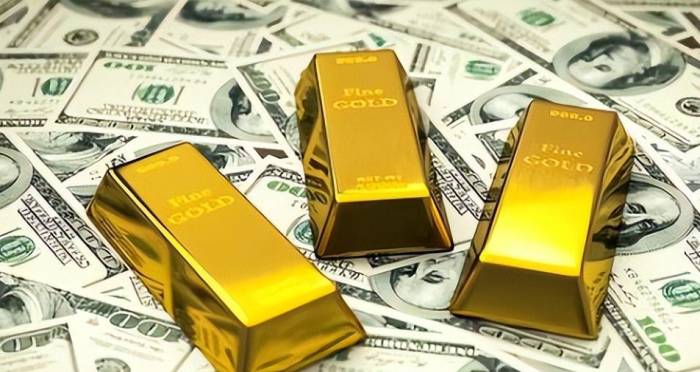
**Gold**: Spot gold once rose by 0.5% to $2,634.90 per ounce, surpassing the historical high set last Friday. Since the Federal Reserve cut rates by 50 basis points last week, gold has continued to rise. Prior to this, the precious metal had already set multiple records this year.
**Cryptocurrency**: Bitcoin slightly fell,报价 at $63,124.9 per coin. U.S. presidential candidate Kamala Harris finally spoke about cryptocurrency for the first time on Sunday. Harris stated that she would "encourage innovative technologies such as artificial intelligence and digital assets, while protecting consumers and investors."
**Crude Oil**: U.S. WTI crude oil futures closed 0.9% lower on Monday. Disappointing business activity in the Eurozone intensified concerns about weak energy demand. The November delivery of West Texas Intermediate (WTI) crude oil futures at the New York Mercantile Exchange fell by $0.63, a decline of 0.9%, to $70.37 per barrel. Economic data released today pointed to a contraction in the dominant service sector of the Eurozone, with the manufacturing sector's decline accelerating, indicating that business activity in the Eurozone contracted significantly in September.
**Metals**: London metals closed higher, with zinc rising by 0.56%, copper by 0.53%, and nickel by 0.46%.
**Macro News**:
U.S. business activity was stable in September, with rising price pressures. U.S. September S&P Global PMI data showed that U.S. business activity remained stable, but the average price of goods and services rose at the fastest rate in six months, possibly indicating rising inflation in the coming months. The September PMI data is consistent with data released this month, including retail sales, which indicate that the U.S. economy maintained strong growth momentum in the third quarter. However, uncertainty surrounding the November 5th presidential election is affecting business confidence. The service sector continues to expand steadily, but manufacturing has fallen to a 15-month low. The average price of goods and services rose at the fastest rate since March, marking the first acceleration of sales price inflation in four months. Rising costs (mainly service sector costs related to wage increases) are considered the cause of this increase. On the surface, this may mean that price pressures are building up again, but more and more evidence suggests that inflation is cooling down.Chicago Fed President: Interest Rates Need to Continue to Fall for an Economic "Soft Landing"
Chicago Federal Reserve President Goolsbee said on Monday at a conference that in order to achieve an economic "soft landing," interest rates need to continue to fall. Despite significant reductions in inflation and a weakening labor market, interest rates remain near their highest levels in two decades, even after the Federal Reserve lowered its target interest rate by 50 basis points last week. Goolsbee, who has been the Chicago Fed President since January 2023, will have a voting right in the Federal Open Market Committee (FOMC) next year. Speaking at the annual meeting of the Association of State Treasurers in Chicago, Goolsbee said, "What I have seen in the past two years is that inflation has significantly decreased without causing a recession, which is unprecedented in the United States and even globally." He added, "Now the unemployment rate is slowly rising to 4.2%, which many consider a fundamentally stable level of full employment, and this is the state we hope the unemployment rate will maintain." Goolsbee pointed out that if monthly inflation data continues at the current pace, the inflation rate will meet the Fed's 2% annual target in a year. He also said that real-time economic activity indicators show solid GDP growth in the third quarter.
Federal Reserve Kashkari: A 50 Basis Point Rate Cut is the Right Move
Minneapolis Federal Reserve Bank President Kashkari said that the Federal Reserve's decision to cut interest rates by half a percentage point last week was the right move. Previously, the Fed had kept interest rates at a high level for over two decades, but last week it lowered the target range for interest rates by 50 basis points to 4.75% to 5.00%, the first rate cut since March 2020. However, the rate cut decision was not unanimous, with Federal Reserve Governor Michelle Bowman preferring to cut rates by only 25 basis points. Kashkari mentioned in an article that the Fed's main policy tool—the overnight interbank lending rate—stated, "The balance of risks has shifted from high inflation to the risk of further weakening in the labor market, which justifies a reduction in the federal funds rate. But even so, the overall policy stance remains tight." Kashkari is not one of the 12 voting interest rate setters in the Federal Reserve this year, but until recently, he was still considered one of the more hawkish members among Fed policymakers.
US Port Strike Looms, Supply Chain Disruptions During the Pandemic May Reappear
As US policymakers shift their focus from curbing inflation to boosting the job market, the economy faces a turmoil that could lead to the reemergence of supply chain disruptions and consumer dissatisfaction during the pandemic. This time, the looming impact comes just as a contentious election is due in a few weeks. About 45,000 dockworkers at major ports on the East Coast and the Gulf of Mexico threaten to strike on October 1. With negotiations deadlocked since June, industry officials now consider a strike inevitable, and ocean carriers and port operators have already begun sending customer notifications and developing contingency plans. More than half of the containerized cargo entering and leaving the United States is handled by the trade gates involved in the strike. According to an estimate, a week-long strike could cost the economy up to $7.5 billion. Analysts warn that the resulting ripple effects will spread globally as port congestion reduces capacity and drives up freight rates.
Goldman Sachs Top Trader: US Stocks Still in a Bull Market, but the Room for Error is Quite Small, and the Risk/Reward is Not Very Attractive
Goldman Sachs top trader Tony Pasquariello pointed out that in the past forty years, there have been five instances where the Fed has cut interest rates and an economic recession did not follow. On average, the S&P 500 index rose by 17% in the 12 months following the first rate cut. However, in the current rate-cutting cycle, with US GDP growth hovering around 3% being very strong and the Dow and S&P indices regaining their historical highs, the current stock market, especially the Nasdaq 100 which is heavily weighted with technology stocks, is "not very attractive in terms of risk/reward," and "the room for error is quite small." He still believes that US stocks are in a bull market and "the future trend is still upward," but the risk/reward has been significantly reduced, "the setup is very demanding, and the path will be unstable," but the strategy of buying when the market is expected to have a significant pullback in the past two years is still very effective.
[Individual Stock News]
Boeing (BA.US) Proposes a 30% Wage Increase Over Four Years to End Mechanics' Strike. Boeing significantly increased its contract offer to the mechanics' union on Monday in an effort to end a strike that could harm the company's interests. Boeing's chief negotiator Fitzsimmons said the new offer was submitted around 9 a.m. local time. "We hope it will address the concerns of both the union and its members, and we hope they will vote as soon as possible." The new proposal increases wages by 30% over four years, higher than the 25% offer that the mechanics rejected. This includes an immediate 12% pay raise and a 6% annual raise for the remaining three years. The annual bonus, which was canceled in the previous offer, has also been restored, adding a variable additional income, typically about 4% per year. Boeing's new proposal also doubles the signing bonus, so each mechanic will receive a $6,000 bonus upon signing. Boeing is currently up more than 2.2%.
Bank of America (BAC.US) Plans to Open Over 165 New Branches by the End of 2026. Bank of America said on Monday that it plans to open more than 165 new branches in the United States by the end of 2026. The bank has redesigned its branches to emphasize face-to-face sales of products such as mortgages and investments, rather than routine teller transactions. Bank of America said in a statement that this year's expansion plan will include the construction of 40 new outlets. The company said it is currently operating in 38 states, excluding the District of Columbia, and will expand to 41 states by 2026.
Qualcomm (QCOM.US) Acquisition of Intel (INTC.US) Could Raise Antitrust and Foundry Concerns. Analysts said that a potential deal to acquire Intel could accelerate Qualcomm's diversification, but it would bring the smartphone chipmaker a loss-making semiconductor manufacturing division, which it may struggle to turn around or sell. The acquisition would also face strict global antitrust scrutiny, as it would combine two important chip companies, making it the largest deal in the industry's history and creating a behemoth with significant market share in the smartphone, personal computer, and server markets.















Join the conversation