The employment report released by the U.S. Bureau of Labor Statistics on Friday showed that non-farm employment positions increased by 175,000 last month, marking the lowest number since October 2023. The March data was revised upwards, indicating an increase of 315,000 jobs instead of the previously reported 303,000.
The U.S. unemployment rate in April was 3.9%, estimated at 3.8%, with the previous rate also at 3.8%. The unemployment rate is roughly at its highest level since January 2022. The more comprehensive U6 unemployment rate, which is more closely watched by Treasury Secretary Yellen, stood at 7.4%, reaching its highest level since November 2021.
Following the release of the U.S. non-farm data in April, the U.S. dollar index plummeted, hitting a low not seen since April 10th, with the lowest reported at 104.52, and the maximum daily drop reaching 0.76%. Traders have brought forward the timeline for the Fed's first rate cut from November to September. U.S. interest rate futures currently predict that the Fed will cut rates by 25 basis points twice in 2024, compared to the expectation of once before the non-farm report.
Breaking it down by industry, in line with recent trends, healthcare led the creation of employment positions, adding 56,000 new jobs.
Other industries that saw significant growth include: social assistance with 31,000, transportation and warehousing with 22,000, and retail with 20,000. Employment growth in the construction industry, government sector, and leisure and hospitality industry has slowed. Employment positions in automobile manufacturing and temporary assistance service providers have decreased.
Overall, the U.S. remains strong, and the market's expectation is simply for no rate hikes, just a desire for earlier rate cuts. The currency war is accelerating, hastening the demise of smaller nation currencies. On March 6, 2024, the Egyptian currency suddenly collapsed, plummeting by 40%, which is equivalent to a 40% evaporation of savings overnight.
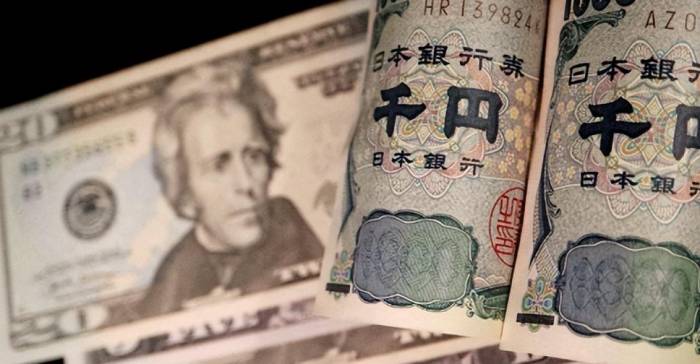
It has even begun to target medium-sized developed countries, with recent rumors of international funds intending to short the yen.
Countries that have abandoned their national currencies in the past 20 years:
Zimbabwe: Since February 2009, the national currency, the Zimbabwean dollar, has been abolished in favor of circulating nine currencies including the U.S. dollar, South African rand, and the euro.Timor-Leste: The US dollar is widely used.
Ecuador: Since 2000, the country has abandoned its own currency and switched to the US dollar.
El Salvador: The US dollar is the legal tender and it is also the first country in the world to legalize Bitcoin.
Marshall Islands: The US dollar is the legal tender.
Federated States of Micronesia: The US dollar is the legal tender.
Palau: The US dollar is the legal tender.
Tuvalu: The Australian dollar is the legal tender.
Liechtenstein: The Swiss franc is the legal tender.
Argentina: Plans to abandon its own currency in favor of the US dollar.
Overall, the high interest rates of the US dollar have a greater impact on medium-sized economies and businesses. It's a dilemma. Small countries can directly abandon their own currencies, while for these medium-sized enterprises, there are no other options.Elon Musk has been quite tormented recently. For a variety of reasons, high interest rates have had a significant impact on Musk's car business. Musk warned that if the U.S. debt continues to grow, the dollar will eventually be worthless.
Musk posted on X (formerly Twitter) on Thursday local time, warning that if the U.S. debt continues to grow, one day the dollar will be worthless. Musk wrote: "We need to do something about our national debt, otherwise the dollar will be worthless." A user commented: "The problem is that no government is willing to take on the national debt issue, because long-term solutions may harm the economy in the short term." Musk responded: "Well, there's always something to give up. We should at least slow down the growth of debt."
In January of this year, Dogecoin co-founder Billy Markus shared a screenshot on the X platform, showing that at the end of 2000, the U.S. national debt was $5.7 trillion, and by September 18, 2023, the U.S. debt had exceeded $33 trillion for the first time.
Subsequently, Musk forwarded this post and commented: If you add unfunded debt (such as social security and healthcare), plus state and local debt, the total U.S. government debt will soon exceed $100 trillion!
The daily report of the U.S. Department of the Treasury on December 29, 2023, showed that the federal government's debt has broken through $34 trillion. The U.S. debt continues to soar like a rocket, with the current debt reaching $34.5 trillion, with annual interest exceeding trillions of dollars, and is rapidly rising to $1.6 trillion.
If you add the U.S. national debt and the federal government's debt together, the total amount has reached about $166 trillion.
This trend is not uniform, but accelerating, indicating that the growth rate in the future will be faster. The United States itself predicts that by 2030, its national debt will reach about $50 trillion, and it is currently only about $15 trillion short.
IMF Chief Economist Pierre-Olivier Gourinchas said that the U.S. fiscal situation is "particularly worrying," making the Fed's response to high inflation more complicated. In the long run, this will increase the fiscal and financial risks faced by the global economy.Of course, this is the perspective of literati. The whole world believes that the United States will continue to expand its economic territory and consolidate its position. Conflicts and cold conflicts will continue for a long time until one side weakens. Under the current high interest rates of the US dollar, the currencies of many small countries in the Asia-Pacific region or around the world have basically all experienced a collapse-like major devaluation, and several countries have even abandoned their own legal tender to resolve the crisis. Just like in life, you don't need too many currencies; the larger the currency, the more popular it is. The currency of a major country is the future! To put it more bluntly, the expansion of the US dollar is the process of annexing the currencies of small countries, until this process ends and the ultimate bottleneck is reached. Even the wolf pack tactic is initiated to nibble at major countries... Therefore, the significance of our efforts to become strong in the East lies here. Because the substitute for the US dollar, at least we can be greater.

















Join the conversation