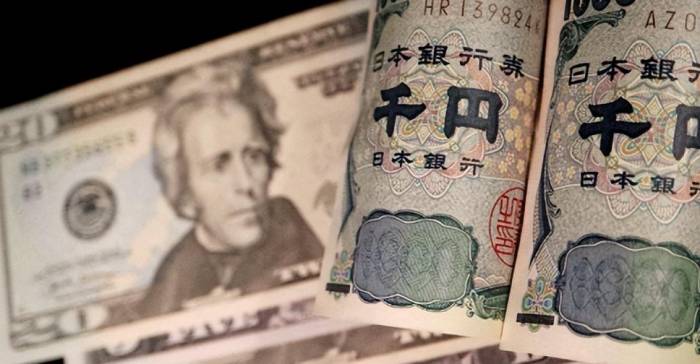
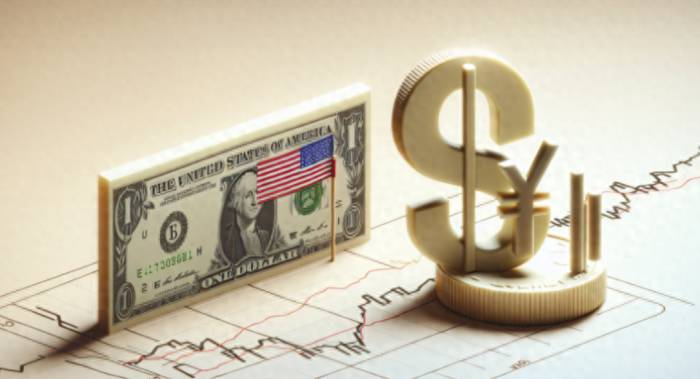
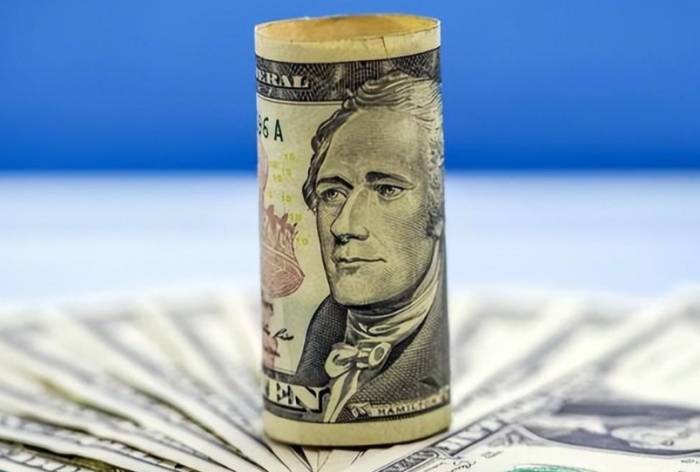
Increasing signs indicate that the Japanese yen will continue to face depreciation pressure. In the last two days, the yen's exchange rate against the US dollar has consecutively stood at the dangerous high of 160. If this situation continues, Japan may become the first country in Asia to be "mowed down" by the US dollar.
To prevent the depreciation of the yen, the Japanese government has invested heavily, using 9.8 trillion yen (equivalent to 443.7 billion yuan) to intervene in the exchange rate. However, it seems that the effect is not ideal, and the yen continues to decline.
So, where should Japan, which is being forced to the edge of a cliff, go next?
I. Japan Forced to the Edge of a Cliff
The yen has always been a currency closely following the US dollar and plays an important role in international trade. For a long time in the past, due to Japan being a manufacturing powerhouse, the yen has also become a popular choice for international reserve currencies.
However, the yen has recently fallen sharply, mainly because the Federal Reserve's interest rate reduction policy is uncertain, coupled with a strong bearish sentiment on the yen in the market, all of which have led to the continuous decline of the yen. Even the Japanese government feels the pressure and is preparing to intervene.
Japanese Finance Minister Shunichi Suzuki has publicly stated that they are closely monitoring the currency market and will take all necessary measures when necessary.
So, what are the consequences of the continued depreciation of the yen?Firstly, the most direct manifestation of the yen's depreciation is the weakening of Japan's national strength. Japan, once the world's second-largest economy, experienced a prolonged recession after the bursting of its economic bubble, and the downward trend of its economic foundation is becoming increasingly apparent.
Japan's GDP has been surpassed by China, and last year it was also overtaken by Germany. There are even predictions that it may be surpassed by India next year. Japan's per capita GDP has also dropped to 34th in the world, the lowest among the G7 countries, which is hard for many Japanese to accept.
Accompanying this is the rise in prices. Japan is a country lacking in resources, surrounded by the sea, and most raw materials need to be imported. Once the yen depreciates, the cost of imports goes up, manufacturing costs follow suit, and ultimately it is the national economy that suffers.
However, while prices are rising, the real wages of workers in Japan have not increased. In March of this year, they set a record of 24 consecutive months of decline, which directly pushed up the unemployment rate.
Japan's unemployment rate reached a high of 5.5% after the 2008 financial crisis, but it has been declining consecutively in the following years and has been maintained at around 2.6% for nearly a decade. This is mainly due to the relatively stable yen exchange rate during this period.
But since 2020, Japan's economy has been in trouble. After the outbreak of the Russia-Ukraine conflict, Japan joined in sanctioning Russia, and the cost of energy imports surged.
Although Japan is a member of the G7, the influence of the G7 is not what it used to be, and its contribution to the global economic recovery is also decreasing. Japan also cannot persuade other Western countries to help, and its situation is naturally very passive.
In fact, the further depreciation of the yen just gave the United States an opportunity, and it also took the opportunity to carry out a new round of "harvesting" on Japan, which made Japan even more speechless.
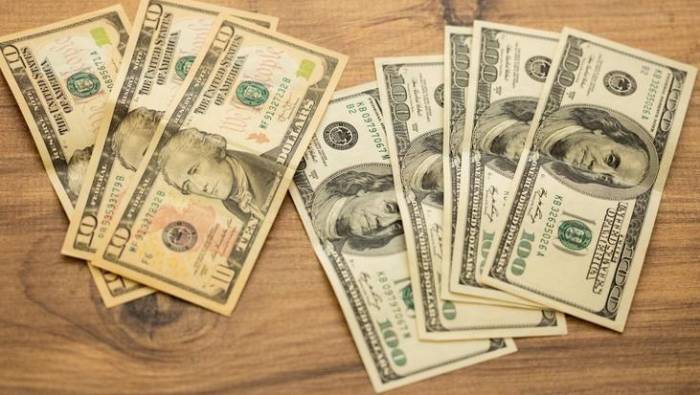
In order to boost the weak yen, the Japanese government has invested 9.8 trillion yen, equivalent to 62 billion US dollars, in the foreign exchange market for exchange rate intervention.
However, this unprecedented bailout action did not achieve the expected effect. Last Friday, the yen exchange rate broke through 157 yen against the US dollar, directly pulling back to the lowest point in 34 years since 1990.Watching Japan now teetering on the brink, what should the government do next to break the stalemate?
II. Where should Japan go from here?
The yen's decline is not only a burden on itself but also a disaster for the Japanese stock market.
Schroders Investment recently downgraded its rating on the Japanese stock market. In their investor report released on Wednesday, they stated that the weakness of the yen has begun to affect the confidence of ordinary consumers and small businesses in Japan, who no longer have a positive outlook on the yen.
To stabilize the bond and stock markets, Japan has no other choice but to increase the scale of selling U.S. Treasury bonds.
Currently, the Bank of Japan holds more than $1 trillion in U.S. debt, making it the largest holder of U.S. debt in the world. In terms of foreign exchange reserves, the Bank of Japan also has $1.3 trillion, more than 80% of which are dollar assets, with U.S. debt accounting for a large part.
In fact, to alleviate the pressure of the yen's devaluation, while the Japanese government is still maintaining a friendly interactive relationship with the United States on the surface, it has actually begun to quietly reduce its holdings of U.S. debt.
Data released by the U.S. Department of the Treasury shows that Japan reduced its holdings of U.S. debt by $37.5 billion in April.
It should be noted that the situation in the United States is also not easy, with the global pandemic still spreading and the Federal Reserve beginning to tighten monetary policy, putting the Bank of Japan in a dilemma.
If the Bank of Japan were to follow the Federal Reserve's example and print a large amount of money to buy government bonds, the $1 trillion in government bonds in its hands might become worthless. However, if it does not sell these government bonds, it will be difficult to curb the trend of yen devaluation.So, Japan may have to opt for selling U.S. Treasury bonds. The advantage of doing this is that the market might create an illusion of interest rate cuts, thereby alleviating the pressure of the yen's depreciation. However, there are also risks involved. If Japan sells a large amount of U.S. Treasury bonds, the U.S. dollar exchange rate and the bond market may be affected, which could anger the United States and lead to stricter sanctions. Therefore, this process needs to be slow-cooked and cannot be rushed.
Of course, apart from selling U.S. Treasury bonds, Japan has another option, which is to raise interest rates. There are some signs now that the Bank of Japan has started to consider the possibility of raising interest rates. Raising interest rates requires certain conditions to be met, such as the inflation rate reaching a certain level.
Recently, Japan's core inflation rate has risen to 2.5%, an increase from the previous 2.2%. The Bank of Japan has its own views on inflation and deflation issues and has accumulated some confidence.
However, not everyone supports raising interest rates, and it is also necessary to consider many issues that may arise after raising interest rates, such as increased debt.
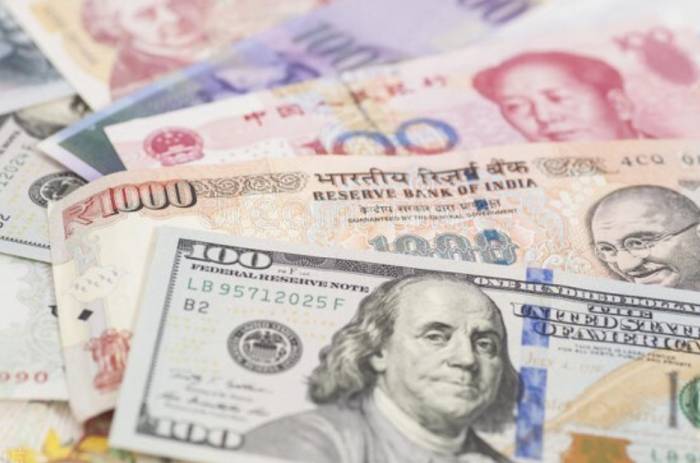
On the Asian currency stage, in addition to the U.S. dollar and yen, which are familiar faces, there are now emerging forces such as the Indian rupee and the Chinese yuan.
In particular, the Indian rupee has recently experienced a significant exchange rate drop, plunging to a historical low, causing a considerable shock to the entire regional economy.
The offshore yuan exchange rate once fell below 7.3, which is the first time since the reform and opening up. The Asian financial market has added a lot of uncertainty due to this change, posing new challenges to the Bank of Japan's decision-making.
According to experience, once the market perceives that the central bank is going to raise interest rates, the exchange rate will immediately respond. Moreover, since Japan has been in a low-interest-rate environment for many years, if the interest rate hike is successful, the impact on the entire economy will be very significant, so Japan is under even greater pressure.However, no matter what choices Japan makes, it won't be smooth sailing. In the future, they might only be able to hope that the United States encounters its own problems, so that it would be too preoccupied to focus on schemes to short Japan.



















Join the conversation