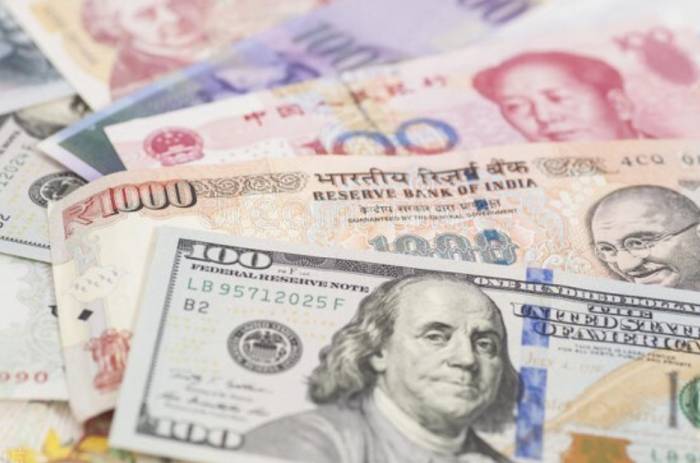
The US dollar, as the world's primary settlement currency, is a key channel for the United States to exert its global influence. However, due to the continuous imposition of sanctions by the US, the international credibility and status of the dollar are facing severe challenges, with the Chinese yuan rising to prominence and being看好 by various countries.
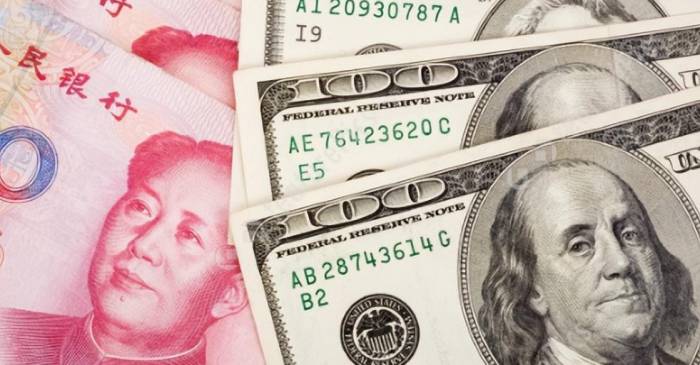
Starting from mid-June, after the US imposed new financial sanctions, Moscow Exchange had to stop trading in US dollars and euros, resulting in the Chinese yuan's share in the Russian foreign exchange market reaching 99.6%.
As Europe, South America, the Middle East, and Africa have successively shown resistance to US unilateral hegemony, and even sparked a "de-dollarization" trend on a global scale, the US government, caught in the eye of the storm, had to clarify its stance.
Friendly reminder: Due to the length of this article, there is an "ad unlock mode" within the text. Fortunately, the platform's new policy allows for free ad unlocking; everyone just needs to watch it to continue reading. Thank you to all the readers and the platform.
I. Multiple countries have begun "de-dollarization"
On July 9th, US Treasury Secretary Yellen expressed her concerns about the international status of the dollar in Congress, especially in the context of US sanctions. She worried that this would prompt other countries to look for financial transaction methods that do not involve the dollar.
During the congressional hearing, Yellen mentioned that the more sanctions the US imposes, the more countries may consider using other currencies for transactions, which could pose a threat to the international status of the dollar.
In addition, Yellen also mentioned discussing with Mexico the establishment of an investment review mechanism similar to the Committee on Foreign Investment in the United States (CFIUS) to prevent China from using Mexico to evade US investment restrictions.
In the field of international finance, Yellen stated that one of her concerns is how to protect the international status of the dollar while implementing sanctions.
She pointed out that the dollar plays an important role in international transactions, and the US has the ability to cut off foreign banks or other businesses from conducting transactions through the US financial system.However, in reality, in recent years, with the changes in the international political and economic landscape, an increasing number of countries have begun to consider or implement "de-dollarization" strategies. These strategies include reducing dependence on the US dollar, increasing the use of their own currencies in international trade, and promoting the diversification of foreign exchange reserves.
Starting from 2022, Russia began to promote "de-dollarization" to reduce the impact of Western sanctions, reducing the share of the US dollar in its international reserves, and requiring "unfriendly" countries and regions to settle natural gas trade in rubles. In addition, India and Malaysia have also agreed to settle trade in Indian rupees, which is an important step for India to "de-dollarize". Last year, Saudi Arabia's Finance Minister Mohammed Al-Jadaan also indicated that Saudi Arabia is willing to consider settling oil trade in non-US dollar currencies, marking the first time in 48 years that Saudi Arabia has shown an open attitude towards currency transactions other than the US dollar.
As countries gradually clarify their "de-dollarization" stance, ASEAN member countries have also agreed to strengthen the use of local currencies within the region and reduce dependence on the current international major currencies in cross-border trade and investment.
It can be said that behind the trend of "de-dollarization" is the concern of many countries about the US dollar hegemony and the fear of the United States using its currency power to impose sanctions. This anxiety has forced many countries to try to develop their own financial settlement systems to protect their own economic interests and guard against potential future risks.
Under this background, the status of the US dollar as the world's main reserve currency is being challenged, and countries are eager to isolate themselves from the influence of the United States. The renminbi is also increasingly becoming their best choice.
II. The internationalization of the renminbi has become a trend.In recent years, the use of the Chinese yuan in international trade and investment has become increasingly common, and its internationalization process is steadily advancing.
According to the 2024 annual "Renminbi Internationalization White Paper" released by the Bank of China, China's cross-border yuan settlement volume exceeded 523 trillion yuan in 2023, a year-on-year increase of 24.1%.
The amount of yuan cross-border receipts and payments for goods trade accounted for 24.4% of the total cross-border receipts and payments in the same period, up 7 percentage points year-on-year.
In addition, the share of yuan in global payment settlements reached 4.14% in December 2023, an increase of 2.23 percentage points compared to January 2023.
In terms of regionalization, the cross-border settlement of yuan in the RCEP free trade area and countries and regions participating in the "Belt and Road" initiative has maintained rapid growth, showing a deepening and expansion of the regional use of yuan.
Data from the Central Bank of Russia shows that due to U.S. sanctions, the share of yuan in the Russian foreign exchange market has significantly increased to 99.6%, while the transaction volume of U.S. dollars and euros has sharply decreased.
It has been proven that U.S. sanctions may prompt some countries to use yuan more in transactions, thereby reducing their dependence on the U.S. dollar.
Li Bin, director of the Macroprudential Management Bureau of the People's Bank of China, also proposed that the People's Bank of China will pay more attention to improving the quality and level of yuan internationalization to meet the needs of market entities in transaction settlement, investment and financing, risk management, and other aspects.
Market surveys show that more and more foreign industrial and commercial enterprises and financial institutions have shown a positive attitude towards using yuan for settlement and investment, with 56.6% of surveyed foreign financial institutions considering increasing the allocation of yuan-denominated financial assets.
This indicates that the functions of the yuan as an international currency are continuously improving, and its role in international payment settlements, financing, and investment is increasingly strengthening.Despite the international payment share of the renminbi being less than one-tenth of the US dollar, the growth of the renminbi payment share indicates that its influence in the global payment system is gradually increasing. With the continuous growth of China's economy and the deepening of opening up to the outside world, the scope and scale of cross-border use of the renminbi are expanding, and the internationalization of the renminbi is facing unprecedented opportunities.
Globally, several countries have already started taking actions to reduce their dependence on the US dollar and seek to establish their own financial settlement systems. Iran has initiated currency transactions with the Russian ruble, India has established a settlement mechanism for international trade using the Indian rupee, and Saudi Arabia has also expressed its willingness to consider settling oil trade in non-US dollar currencies.
These dynamics reflect the international community's concerns about the dollar hegemony and the fear of the United States potentially using its currency power to impose sanctions. This concern has prompted some countries to attempt "de-dollarization" to protect their own economic interests and guard against potential future risks.
Why "de-dollarize"? Although the US dollar remains the world's main reserve currency, its status as a reserve currency has been declining rapidly over the past 20 years. This trend is partly due to the recession of the US economy and the misuse of the dollar's "weaponization." Since the outbreak of the Ukraine crisis in 2022, the United States has imposed comprehensive sanctions on Russia, which not only froze Russia's assets but also raised concerns in other countries about the safety of the US dollar.
The United States uses the abuse of financial sanctions to strike against its opponents, but this approach has instead weakened the international trust in the US dollar. As a result, many countries have begun to seek alternative financial transaction methods to the US dollar to reduce their dependence on it.Additionally, with the redistribution of global economic power, emerging market countries are gradually becoming the dominant force in "de-dollarization." They wish to break free from the control of the US dollar, promote the international status of their own currencies, and enhance the independence of their economies and finances.
Furthermore, the aggressive interest rate hike policy of the Federal Reserve has led to the continuous strengthening of the US dollar, causing other countries to face issues such as currency devaluation, high inflation, and capital outflows. At the same time, it has increased the debt servicing costs and default risks for emerging markets and developing economies.
As the world economic pattern evolves and the trend of multipolarity strengthens, the international influence of the renminbi is growing day by day, and the "US dollar hegemony" is facing a historic turning point.
In the future, as the renminbi gradually moves towards internationalization and becomes a major currency in global trade and financial transactions, it may only be a matter of time.
















Join the conversation