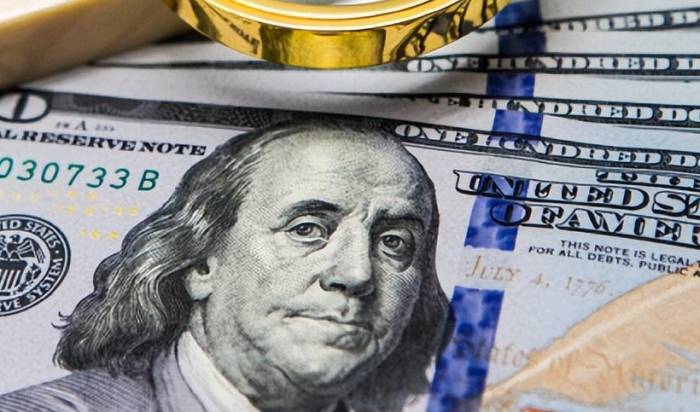
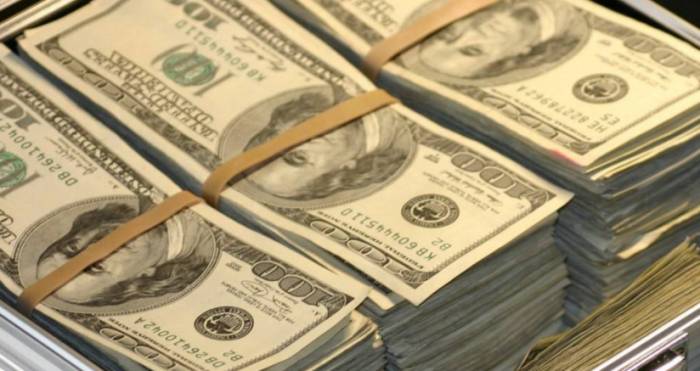
As one of the largest holders of foreign exchange reserves globally, China's foreign exchange reserve scale has always been a focus for investors worldwide. Data indicates that China's foreign exchange reserves have now surpassed $3.2 trillion.
In the meantime, the People's Bank of China has hit the pause button on increasing its gold holdings, a move that has tugged at the nerves of the entire market.
The persistent strengthening of the US dollar has led the United States, after a series of economic harvests, to even entertain the idea of reaping China. Janet Yellen has repeatedly emphasized in public that China must exercise restraint, or else face severe consequences.
I. $3 Trillion Foreign Exchange Reserves
According to a set of data released by our country's State Administration of Foreign Exchange, as of the end of June, China's foreign exchange reserve scale stands at $3.222 trillion.
Such a massive financial reserve also demonstrates the strong economic power of China. In fact, since 2006, China's foreign exchange reserve scale has been the world's number one for 18 consecutive years, and in recent years, it has remained steadily above $3 trillion.
Foreign exchange reserves are an important manifestation of a country's economic strength and can support the country's foreign trade and investment activities, promoting economic growth and development.
When a country needs to engage in international trade, repay foreign debts, or deal with emergencies, sufficient foreign exchange reserves can ensure smooth payments.
Similarly, when market supply and demand relationships are disrupted or exchange rates experience abnormal fluctuations, central banks can use foreign exchange reserves for intervention to prevent significant currency devaluation or appreciation.
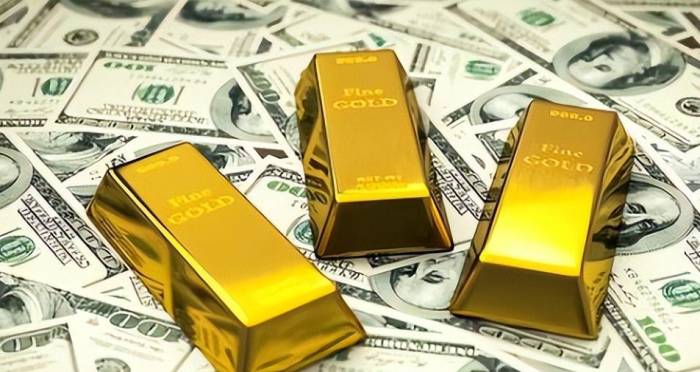
The importance of foreign exchange reserves is self-evident, and gold, as an important component of international reserves, can help countries achieve diversified asset allocation within their foreign exchange reserves.According to reports, the central bank has already begun to stop purchasing gold. Specifically, by the end of June, the gold reserves of our country's central bank were 72.8 million ounces, which was the same as at the end of May. In other words, the amount of gold reserves in our country has remained at the same level for two months.
What is the reason behind this?
II. Central Bank Stops Purchasing Gold
Looking at the international situation, the United States is currently facing many difficulties, such as high inflation, slowing economic growth, and expanding government debt.
In order to save itself, the United States has started a financial war, targeting China, the world's second-largest economy. However, China is not so easily defeated.
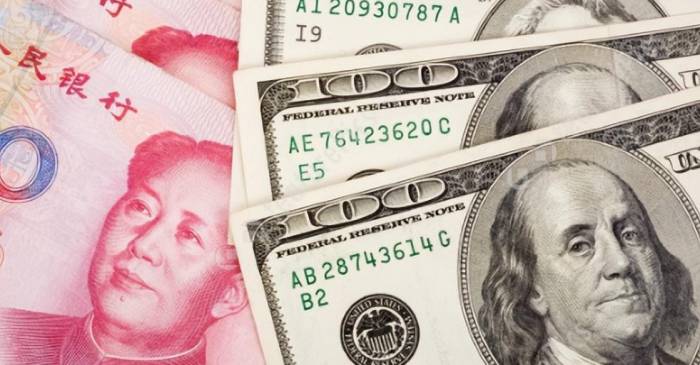
After experiencing a series of attacks from the United States, China began a "counter-offensive war". It has made great progress in semiconductor chips and is actively promoting the process of de-dollarization, reducing dependence and risk on the United States and the dollar.
The United States' means of harvesting the world can be simply understood as raising interest rates through interest rate hikes, thereby causing the global dollar to flow back to the United States, and ultimately completing the global harvest.
Japan is a good example. Last month, Japan used 9.8 trillion to save the market but failed. In order to continue its life, Japan even dared to break with the United States and sold more than 30 billion in U.S. debt.
This surprised the United States, so it closely watched Japan's foreign exchange manipulation in order to continue to harvest it financially.
However, this method is not effective in China, because our country has a powerful financial weapon, that is, foreign exchange control. By setting limits, it manages the outflow of funds through abnormal channels, which also leads to the United States' harvest in China not having any effect.In order to safeguard its economic interests, China needs to make reasonable adjustments to its foreign exchange and gold reserves to maintain the stability of the domestic economy. At the same time, to ease inflationary pressures, Europe and Canada have taken the lead in implementing interest rate cuts. As a result, the Federal Reserve recently held an internal meeting where they proactively discussed the issue of raising interest rates.
In fact, looking at the data released by the United States earlier, the overall level of new employment in the U.S. has remained relatively high. Additionally, inflation data has shown signs of fluctuation over the past few months. There has already been international discussion about the Federal Reserve lowering interest rates, with a general consensus that the likelihood of a rate cut in September is only about 50%. Some extreme voices even argue that the current U.S. economy is thriving, with no reason to justify a rate cut.
From the perspective of this discussion, it may be more likely for the U.S. to lower interest rates around the time of the U.S. elections in November, but this is not good news. This implies that in the coming months, the U.S. could still potentially reap benefits at the expense of other countries, and the pressure of capital outflows faced by other economies, including China, is imaginable.
It is against this backdrop that China's reduction of foreign exchange reserves and stabilization of its gold reserves have become a necessary choice. However, under the current international context, the strong position of the U.S. dollar remains robust, leading other countries to still have great expectations for purchasing U.S. dollars.
Future uncertainties could challenge the strong position of the U.S. dollar, leading to a devaluation of these early-purchased U.S. dollar assets. Additionally, the price of gold usually has an inverse relationship with the trend of the U.S. dollar. When the U.S. dollar strengthens, the attractiveness of gold as a non-U.S. dollar asset relatively diminishes. Moreover, the current international gold price is around $2,400 per ounce, which is at a historical high.When purchasing gold reserves, it involves the use of a country's foreign exchange reserves. The volatility of gold prices means that when the price of gold rises, the value of the reserve assets will increase; conversely, when the price of gold falls, the value of foreign exchange reserves will decrease.
When a country makes investments, it also needs to consider the rate of return on those investments. Therefore, to avoid the risks associated with price volatility, it is a reasonable consideration to choose not to increase gold reserves.
III. Yellen Starts to Panic
The United States' attempt to force China to submit and compromise by initiating a second trade war is undoubtedly a significant sign of its "general offensive" strategy towards China.
According to in-depth analysis, the fundamental purpose of the series of policy measures taken by the Biden administration is to completely weaken China's related industries to ensure that the United States' absolute leadership position globally is not challenged.
Looking back at history, due to relatively weak strength, China had to choose to endure and compromise in many cases when faced with deliberate provocations and difficulties from the United States.
However, times have changed, and China is no longer what it used to be. Although it still falls short of the United States in overall strength, China has acquired sufficient capabilities to counteract the suppression and containment by the United States. Faced with the United States' unreasonable demands and pressures, China naturally will no longer choose to retreat and compromise.
It is worth noting that the United States seems to have also felt the pressure. Previously, U.S. Treasury Secretary Yellen took the initiative to appeal to China, asking China to exercise restraint and avoid taking drastic countermeasures.
This obvious double standard behavior is undoubtedly a blatant challenge to international fairness and justice. Since the United States has chosen to target China, it should be prepared to pay the corresponding price for doing so.
China has always adhered to the principle of not provoking trouble but not fearing it, and has always insisted on the path of peaceful development. However, if the United States continues to hold onto those unrealistic and erroneous ideas and does not promptly adjust its policy towards China, the eventual outcome will not be difficult to foresee.China is determined and capable of defending its national interests and dignity, and any attempt to contain China's development is doomed to be futile.
In the context of globalization, cooperation and mutual benefit is the correct path for the common development of all countries. Any unilateralism and protectionism are not in line with the trend of the times and will inevitably be widely opposed by the international community.




















Join the conversation