In 2018, an astonishingly rich deposit of rare minerals was discovered in Guangdong Province, China, with a value far exceeding that of gold, estimated at 4.6 billion yuan per ton in the market.
This discovery not only caught the attention of the international community but also stirred complex emotions in neighboring Japan, with many wondering: Why is it China again?
So, what exactly is this mysterious mineral, dubbed a "priceless treasure," and why does it command such a high value?
I. The "Priceless Treasure" That Shocked the World
The story began with an unusual geological exploration in Guangdong Province, which suddenly brought two previously obscure villages, Neiwan Village and Feilai Gorge Village, into the global spotlight.
In 2018, the Guangdong Mining Association announced that, with the support of a professional geological survey team, Guangdong Guangding International Holding Group had discovered an astonishingly large natural rubidium deposit in Mabugang Town, Longchuan County, Heyuan City, Guangdong, after years of hard work.
This discovery not only filled the gap in China's independent rubidium deposit field but also marked the first time a large-scale independent rubidium deposit was confirmed and thoroughly surveyed worldwide. Its scale is considered the largest known rubidium deposit.
The deposit contains up to 175,000 tons of rubidium resources, accounting for nearly 60% of the global proven rubidium resources and all of China's known rubidium resources. Based on the global demand for rubidium, this deposit can support global needs for up to 1,200 years.
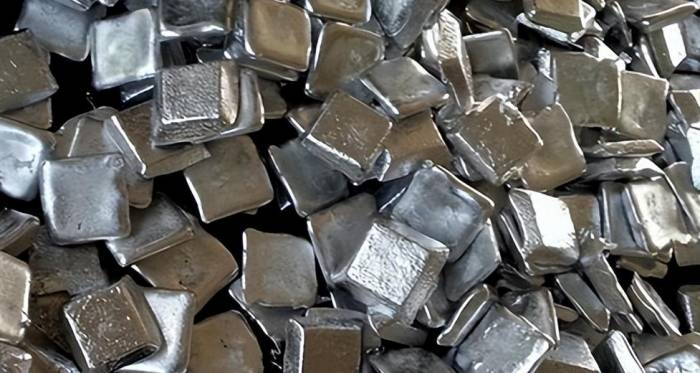
According to overseas data, each ton of rubidium metal in this natural deposit is worth up to 600 million euros, which is approximately 4.6 billion yuan when converted to yuan. This means that the total value of the entire deposit reaches an astonishing 805 trillion yuan, making it one of the most expensive treasures on Earth.So, what exactly is the element rubidium, and why does it possess such extraordinary value?
As a member of the alkali metal family, rubidium's physical properties are extremely similar to those of metals like potassium and cesium, which is why it is often referred to as a "pseudo metal."
Its most notable characteristic is its extremely high reactivity, which allows it to easily undergo chemical reactions with various non-metal elements such as oxygen, fluorine, and sulfur, and almost any non-metal element can combine with it to form compounds.
Because of this, rubidium does not exist in a pure state in nature but is widely distributed in the form of compounds, requiring a complex process to extract and purify it from these compounds.
Although the natural abundance of rubidium is not as high as other common metals, its application fields are exceptionally broad.
II. The Wide Range of Applications for Rubidium
With the continuous advancement of technology, the unique properties of the rubidium element have shown a broad application prospect in multiple fields.
In modern materials science, special glasses containing rubidium have become a highlight of rubidium applications.
These glasses typically add rubidium carbonate as a key component to improve their electrical conductivity, enhance stability, and extend service life, and are therefore frequently used in fields such as fiber optic communication and night vision devices, providing strong support for information transmission and night observation technologies.
The energy industry also benefits from the characteristics of rubidium. The hydrides and borides of rubidium, due to their high-energy properties, are considered ideal solid fuels, suitable for efficient energy conversion systems such as magnetohydrodynamic power generation and thermionic power generation, as well as ion propulsion technology, laser power generation, and ion cloud communication.Especially rubidium-based ion thrusters, whose efficiency far exceeds that of traditional fuels. It is estimated that spacecraft using rubidium as a propellant can travel up to 150 times the distance of existing spacecraft using solid or liquid fuels, opening up new possibilities for deep space exploration.
In the field of medical health, rubidium also plays an important role. Rubidium iodide can be used as an alternative to potassium iodide for the treatment of goiter, commonly known as "big neck disease."
In addition, rubidium salts show potential in the treatment of mental diseases, such as being used as sedatives to help epilepsy patients alleviate symptoms.
In the aerospace industry, the application of rubidium is also not to be underestimated, especially in the launch and operation of satellites in the Beidou navigation system.
With the rapid development of space technology, the requirements for the accuracy and stability of frequency and time standards are increasingly high. Rubidium atomic clocks, with their excellent time stability, low drift rate, radiation resistance, and compact and lightweight design, perfectly meet this demand.
Statistics show that the accuracy of rubidium atomic clocks is so high that even in a 3.7 million-year operating cycle, the error will not exceed one second, making it an indispensable timing tool in the field of space.
In the new energy industry, the element rubidium also occupies a place. Photovoltaic inverters, as a key component in converting solar and wind energy into core electrical energy, widely integrate rubidium elements in their chips.
It is predicted that the demand for rubidium in photovoltaic inverters in the future will account for half of the existing total, highlighting the key position of rubidium in promoting the progress of new energy technology.
III. Why is Japan envious?
The discovery of rubidium deposits, this "priceless treasure," is undoubtedly a major good news for China, but for Japan, it may not be good news.Due to the scarcity of rare earth resources within Japan's territory, ensuring a long-term stable supply of resources has become the core of its national strategy. Japan's resource reserve system mainly includes three major categories: petroleum, liquefied petroleum gas, and rare metals. Among them, the reserves of rare metals cover ten key metals, including rubidium, to cope with potential resource shortage risks.
However, the uncertainty of the current international situation has exacerbated Japan's energy security issues. Coupled with its small land area and lack of domestic energy production, Japan's dependence on imported mineral resources is extremely high, with an energy self-sufficiency rate of less than 10%.
It is worth mentioning that Japan has achieved rapid development in the production and application of rubidium in the past two decades. The "Rare Metal Security Strategy" released in 2009 even listed rubidium as one of the strategic minerals.
However, due to the lack of rubidium ore resources within Japan, its dependence on imports is particularly obvious. According to statistics from the Japan External Trade Organization (JETRO), in 2019, Japan imported 1.1 tons of rubidium metal and rubidium salts from China, accounting for 95.6% of its total imports, highlighting China's position as the main supplier of rubidium resources for Japan.
The significant discovery of rubidium ore deposits in China not only enhances China's position in the global rare metal map but also arouses Japan's deep concern and complex emotions.
In addition to rubidium, China also has abundant resources of indium, tungsten, germanium, and rare earths. The reserves of indium and tungsten account for 80% and the first place in the world, respectively, showing China's unique advantages in the field of rare metals.
These resources are not only precious national wealth but also the cornerstone of supporting the operation of modern industrial society. They are non-renewable precious assets. If China can make good use and develop these rare metal resources, it will strongly promote the country's long-term development and great rejuvenation.



























Join the conversation