Previously, everyone was quite curious as to why our country's banks remained silent when the Federal Reserve suddenly cut interest rates by 0.5%.
However, recently our country's banks have also been making consecutive moves, which has cleared up everyone's previous doubts, and many people have started to think that the banks are doing the right thing.
Now, what everyone wants to know the most is, what new actions will our banks take next? Will they make a grand gesture to make borrowing money easier?
I. Federal Reserve Interest Rate Cut
Everyone is aware that when the United States raises or lowers interest rates, it's not a simple matter. It's like a quiet competition, which is essentially a financial battle between China and the United States.
In reality, when the United States makes such a move, it affects not only China but also gets the whole world moving. This is a contest between the US dollar and the global economy. The US dollar's maneuvers are both an attempt to be the leader and to gain benefits.
Moreover, the United States' adjustment of interest rates is also a kind of internal struggle within their own country. For example, they want to control the speed of price increases, and some people believe that this is the financial giants in the United States posing难题 for the industrial giants.
Regardless of whether there are any hidden forces at play, this is an obvious matter. In other words, the United States' adjustment of interest rates is quite sensitive to the whole world and must be handled with care.
When the US central bank lowers interest rates, in simple terms, it means they have decided to reduce the interest rates on loans between banks. As a result, banks can borrow money more cheaply, and they are more willing to lend money to businesses and the public at lower interest rates. This encourages everyone to borrow money to buy things or do business, which can stimulate the economy.
The most recent interest rate cut by the US central bank occurred on September 19, 2024, when they announced a reduction of the federal funds rate by 0.5%, bringing it to a range of 4.75% to 5%.This is the first interest rate cut since March 2020 and also the first significant relaxation of monetary policy since 2019.
So, what impact will this interest rate cut by the U.S. central bank have on us?
II. Impact of the Federal Reserve's Interest Rate Cut
The U.S. dollar is a global currency; when interest rates are lowered, the cost of borrowing decreases. Consequently, those holding dollars might seek more profitable investment opportunities, such as purchasing stocks, bonds, or investing in real estate. These investments might increase in value due to the increased demand.
At the same time, if the dollar depreciates, some funds might flow into other countries, such as emerging markets. Assets in these markets might appreciate due to the influx of foreign capital.
For us ordinary people, this move by the U.S. could potentially lower our borrowing costs, whether it's for mortgages, car loans, or other significant investments. We could all benefit from lower interest rates, which is good news.
However, lower interest rates might lead to higher prices for goods, especially imports. As the dollar loses value, the cost of importing goods increases, and ultimately, consumers might have to bear the cost.
Regarding why the U.S. central bank decided to cut interest rates, it's related to the country's economic conditions. For instance, during the 2008 economic crisis, they reduced interest rates to almost zero to stimulate the economy.
By 2024, they cut rates because they observed less pressure from rising prices and fewer job opportunities. They needed to find a way to balance these two issues.
However, this approach by the U.S. also carries risks. If goods become too expensive, they might have to raise interest rates again, which could potentially destabilize the market.Moreover, when interest rates are lowered, some money might flow out of US dollar assets, which could affect how money moves globally and how exchange rates change. So, what should be done? In simple terms, it's about not letting money run away too quickly. When the US lowers interest rates, other countries' central banks might also need to follow suit to maintain a certain interest rate gap, so that money won't flee as rapidly.
Of course, these countries won't simply do whatever the US says; that would be a huge loss. So, when the US begins to lower interest rates, it's like a new race has started.
III. Countries' Response Strategies
The US central bank reduced interest rates on September 19th, the first time since the start of the pandemic, indicating that they are somewhat concerned about the US economy gradually slowing down. They did this mainly because they noticed that US prices are not rising as much, the number of people looking for jobs has decreased, and economic growth is not as strong.
This interest rate cut aims to make borrowing cheaper and stimulate the economy to prevent it from sliding too much. As soon as this news came out, global wallets were affected. The US dollar became less valuable, and the US Dollar Index has fallen by 3% since August, now hovering around 101.
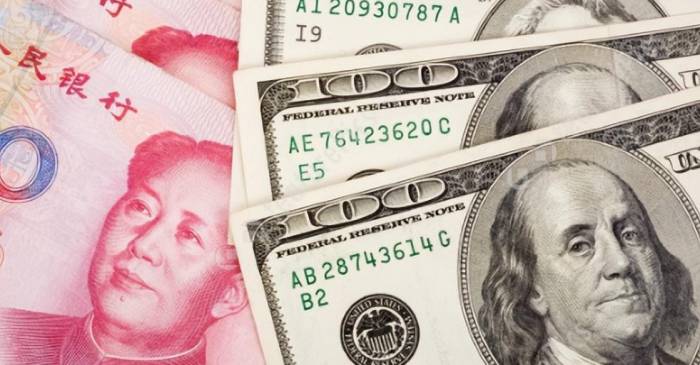
This has given other countries' currencies a bit of a breather. For example, the exchange rate of the Chinese yuan against the US dollar was 7.05 yuan on September 23rd, up by 2.4% since August.
Generally, when the US central bank lowers interest rates, other countries' banks will also follow suit, hoping to make their own currencies more competitive in the world and to stabilize capital flows.On the day of the rate cut, British banks didn't follow suit, and Japanese banks remained still, as if they didn't quite buy into the United States' move.
For us in China, with the U.S. making such a move, our banks have gained more room to decide how to operate their own interest rates.
The governor of the People's Bank of China said that we should still let the market determine the exchange rate, maintain its flexibility, and also be careful not to let the exchange rate fluctuate too much.
Although the U.S. rate cut may affect China's exchange rate policy, the People's Bank of China mainly looks at China's own economic situation, such as economic growth, prices, and job-finding conditions, so the People's Bank of China will adjust its policies according to its own needs.
The People's Bank of China has stated that the benchmark interest rate, the LPR, will remain unchanged for now, but at the same time, it has also taken some other actions.
On September 24th, China announced a series of measures, such as reducing the reserve requirement ratio for banks, lowering mortgage interest rates, and the down payment ratio.
This strategy is quite smart, probably something the U.S. Federal Reserve didn't anticipate, and moreover, the People's Bank of China has made quite a few other moves, such as lending money to banks in the short term, totaling about 2.1 trillion yuan, all of which are controllable, so there's no need to worry too much about U.S. policies.
Our economy needs a boost, but at the same time, we must be careful not to be affected by U.S. interest rate policies. The People's Bank of China has put a lot of thought into this move.
Now, everyone wants to know, what other moves will the People's Bank of China make next?
In the future, it is highly likely that the People's Bank of China will still have to look at China's own economic situation and adjust in a controllable way. If the U.S. Federal Reserve recklessly lowers interest rates to around 2%, then the situation may undergo significant changes.Certainly! Please provide the text you would like translated into English, and I will be happy to assist you.















Join the conversation