Recently, the heat of Sino-Russian relations seems to have cooled down abruptly, catching many off guard. The Sino-Russian trade, once referred to as a "hot topic," has now encountered an unexpected "emergency brake." From a high-speed growth of 32% last year to a mere 1.9% slight increase this year, this sharp drop in numbers has attracted widespread attention. What's more surprising is that Russian experts have actually attributed part of the responsibility to China. What's going on here? Has the "honeymoon period" between China and Russia truly come to an end? Let's unravel this mystery together and see the true face of Sino-Russian relations.
It is well known that Sino-Russian relations have always been described as "as close as brothers," with leaders of the two countries frequently visiting each other, seemingly having a very strong relationship. However, the recent trade data has poured a bucket of cold water on this relationship.
Let's first look at how alarming this data is. Last year, the growth rate of Sino-Russian trade was as high as 32%, which was quite prosperous. But this year, the number has plummeted to 1.9%, essentially transforming from a "galloping pony" to a "snail's crawl." Such a significant gap is understandably drawing so much attention.
Some might say, isn't this just a game of numbers? Don't rush, there's a lot more to this. It's important to understand that trade data is a "barometer" of the relationship between the two countries. A decline in data means there's an issue with the economic interactions between the two nations.
So, where does the problem lie? Interestingly, Russian experts have actually blamed China. They say that China's economic policies have changed, leading to a decrease in trade growth. This statement sounds a bit like passing the buck, doesn't it?
But is the matter really that simple? We need to think this through carefully.
Firstly, Russia itself is not a country that saves energy. The Russia-Ukraine conflict that erupted in 2022 has been a "major earthquake" for the Russian economy. War costs money, which is common sense. It is said that Russia burns through $300 million a day on the front lines, amounting to tens of billions of dollars a year. If this money were used for business, wouldn't the Sino-Russian trade volume soar?
Let's also talk about the sanctions imposed on Russia by Western countries; this is not a joke. From financial transactions to high-tech products, even chips are no longer available to Russia. As a result, Russia has fewer things to buy and fewer things to sell. Chinese companies wanting to do business with Russia also have to consider whether they might be targeted by the United States.
However, sanctions are not entirely bad. They have actually promoted cooperation between China and Russia in certain areas. For example, after being "cut off" by the West, many goods have turned to China for procurement. From daily necessities to industrial equipment, Chinese products are very popular in Russia.
But this passive trade growth also has its problems. It is not sustainable; once the West lifts sanctions, Russia is likely to turn back to the European and American markets. Moreover, this trade structure is not healthy either; long-term reliance on the export of low-end products does not help China's economic transformation.So, what role has China played in this matter? In fact, China has been striving to maintain normal trade relations with Russia. However, facing such a complex international situation, Chinese companies also have to be more cautious. After all, no company is willing to risk being sanctioned indirectly to do business.
In the final analysis, the cooling of China-Russia trade cannot be simply attributed to the problem of one side. This involves complex international situations, economic conditions, and policy changes.
So, besides these external factors, are there also some internal issues within China and Russia? This has to start with the economic structure of the two countries.
The Russian economy has a long-standing problem - excessive dependence on energy and raw material exports. When international oil prices fall, the Russian economy follows suit. Looking at Russia's industrial structure, it is simply "walking on one leg". Apart from energy, other industries are not strong enough. This single economic structure makes Russia very passive in the international market.
Let's look at China again. Unlike Russia, China has been promoting economic transformation and upgrading over the years, from "Made in China" to "Created in China", it can be said that a lot of effort has been made. However, this process is not smooth sailing. China is working hard to get rid of its dependence on low-end manufacturing and turn to high-tech, high value-added industries. What does this mean? For Russia, it may mean that China's demand for raw materials and energy will slow down, which will undoubtedly affect China-Russia trade.
However, opportunities and challenges coexist. China's economic transformation has also opened up new areas for China-Russia cooperation. For example, in the fields of high-tech, artificial intelligence, new energy, and other fields, there is room for cooperation between the two countries.
So, facing these challenges, how should China and Russia break the deadlock? Is it to continue "hugging for warmth" or to find a new way?
In fact, the potential for China-Russia cooperation is still very large. The key is to find the right direction and open up new areas of cooperation.
For example, energy cooperation is still the "ballast stone" of China-Russia relations. The Yamal liquefied natural gas project developed by China and Russia is a good example. This project not only provides China with a stable energy supply but also promotes Chinese companies to "go global".
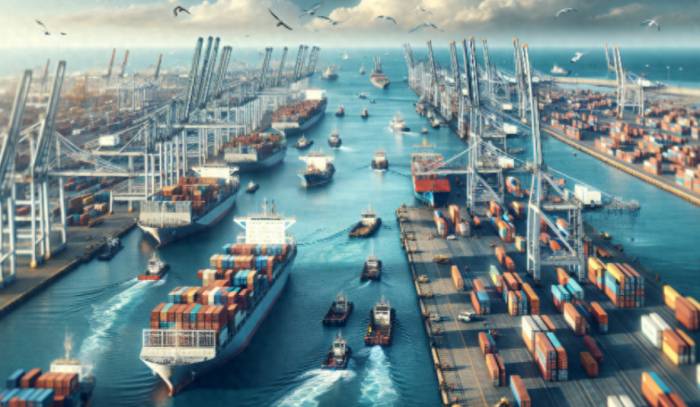
Let's talk about the Arctic shipping route. The opening of this route has brought new opportunities for China's foreign trade. Compared with traditional routes, the Arctic shipping route can greatly shorten transportation time and reduce costs. This is undoubtedly good news for Chinese companies.However, China-Russia cooperation should not be limited solely to energy and transportation. Faced with the new international situation, the two countries should enhance their collaboration in high-tech fields. For instance, in areas such as artificial intelligence, aerospace, and new materials, both China and Russia have their own strengths, which can perfectly complement each other.
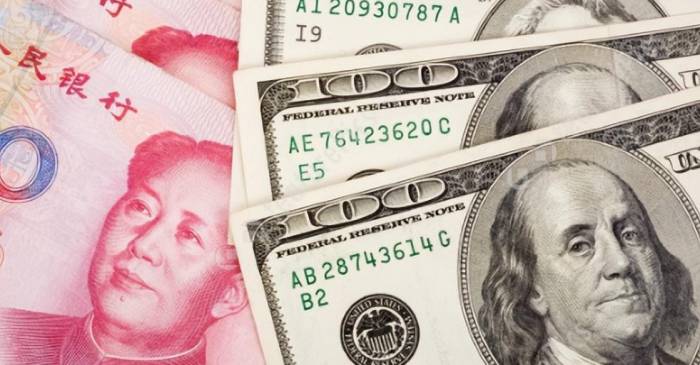
Financial cooperation is also an area worth paying attention to. In the face of dollar hegemony, both China and Russia are actively promoting settlement in their own currencies. This can not only reduce exchange rate risks but also decrease dependence on the US dollar.
Of course, there will inevitably be some obstacles on the path of cooperation. For example, issues related to the investment environment. There is indeed room for improvement in Russia's investment environment. Inadequate legal regulations and administrative efficiency that needs to be enhanced are challenges faced by Chinese enterprises when investing in Russia.
Additionally, the two countries still have competitive relationships in some areas, especially regarding influence in Central Asia. However, as long as both sides maintain communication and seek common ground while reserving differences, these issues can be resolved.
Ultimately, the key to China-Russia cooperation lies in mutual benefit and win-win outcomes. Both countries should break away from traditional trade patterns and seek new growth points. For example, they can strengthen cooperation in emerging fields such as the digital economy and green development. This can not only inject new vitality into the relationship between the two countries but also jointly address global challenges.
Faced with a complex international situation, China and Russia should join hands and move forward together. After all, in this world full of uncertainty, how important it is to have a reliable partner.






















Join the conversation